earthspun
earthspun
Sustainable E-Commerce App Ideation & UX/UI
Sustainable E-Commerce App Ideation & UX/UI
Figma
Figma
Illustrator
Illustrator
Photoshop
Photoshop
We Have a Shopping Problem.
We Have a Shopping Problem.
The sustainable fashion landscape is growing,
but it remains overwhelming and confusing for many consumers.
The sustainable fashion landscape is growing,
but it remains overwhelming and confusing for many consumers.
Meanwhile, fast fashion brands dominate because they are saturated, searchable, convenient, and visually appealing.
Making ethical choices just as convenient and appealing as fast fashion.
Making ethical choices just as convenient and appealing as fast fashion.
Meanwhile, fast fashion brands dominate because they are saturated, searchable, convenient, and visually appealing.
Ethical consumers wonder...
Is this material actually sustainable? Can I trust this brand? Where was this made? Why does every website measure sustainability differently?
Why it's So Difficult
Ethical brands lack visibility. Research is overwhelming. Labels are confusing. Terms like “eco-friendly,” “recycled,” or “carbon neutral” lack standardization.
So… I designed an app!
So…
I designed an app!
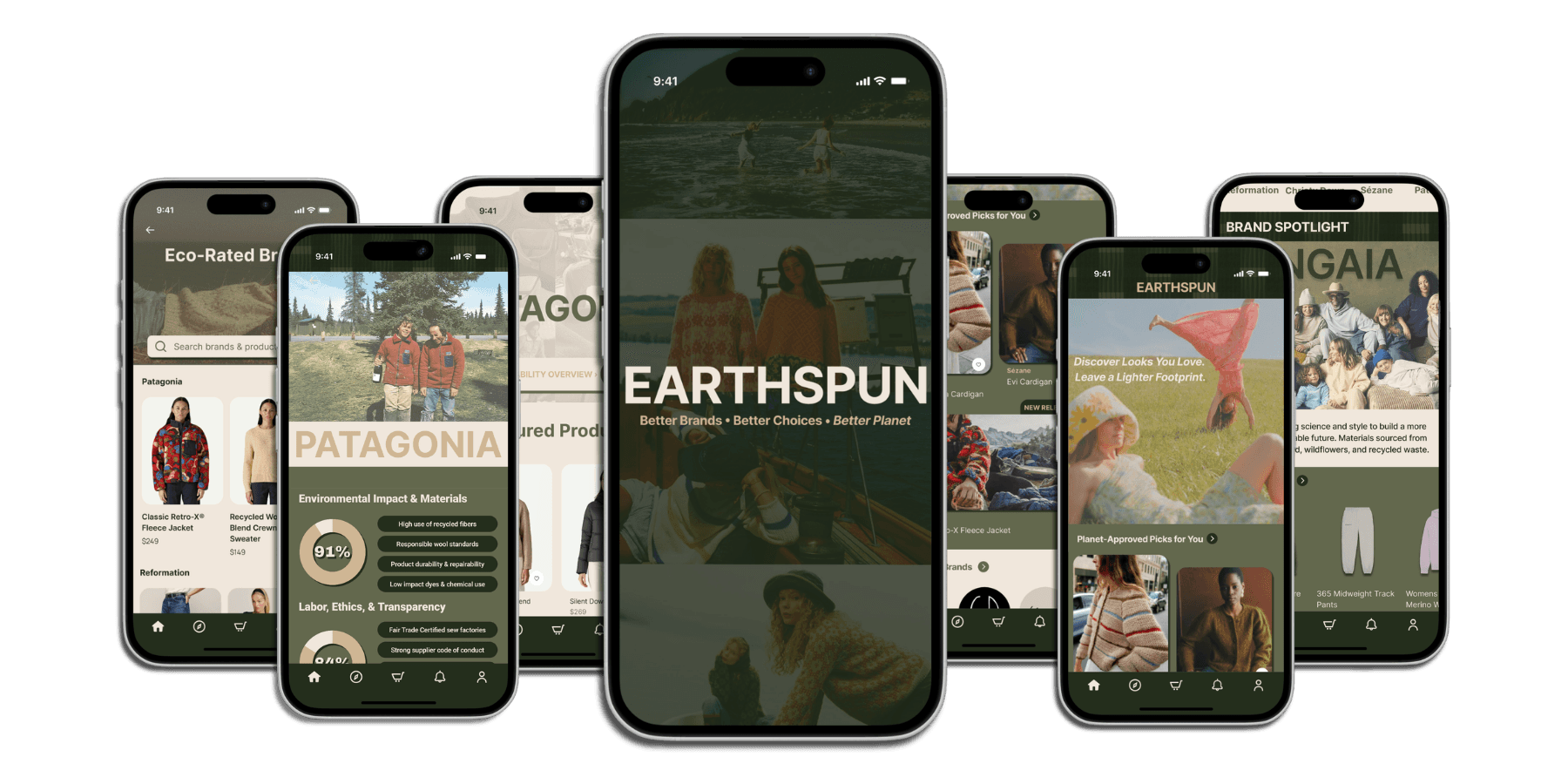
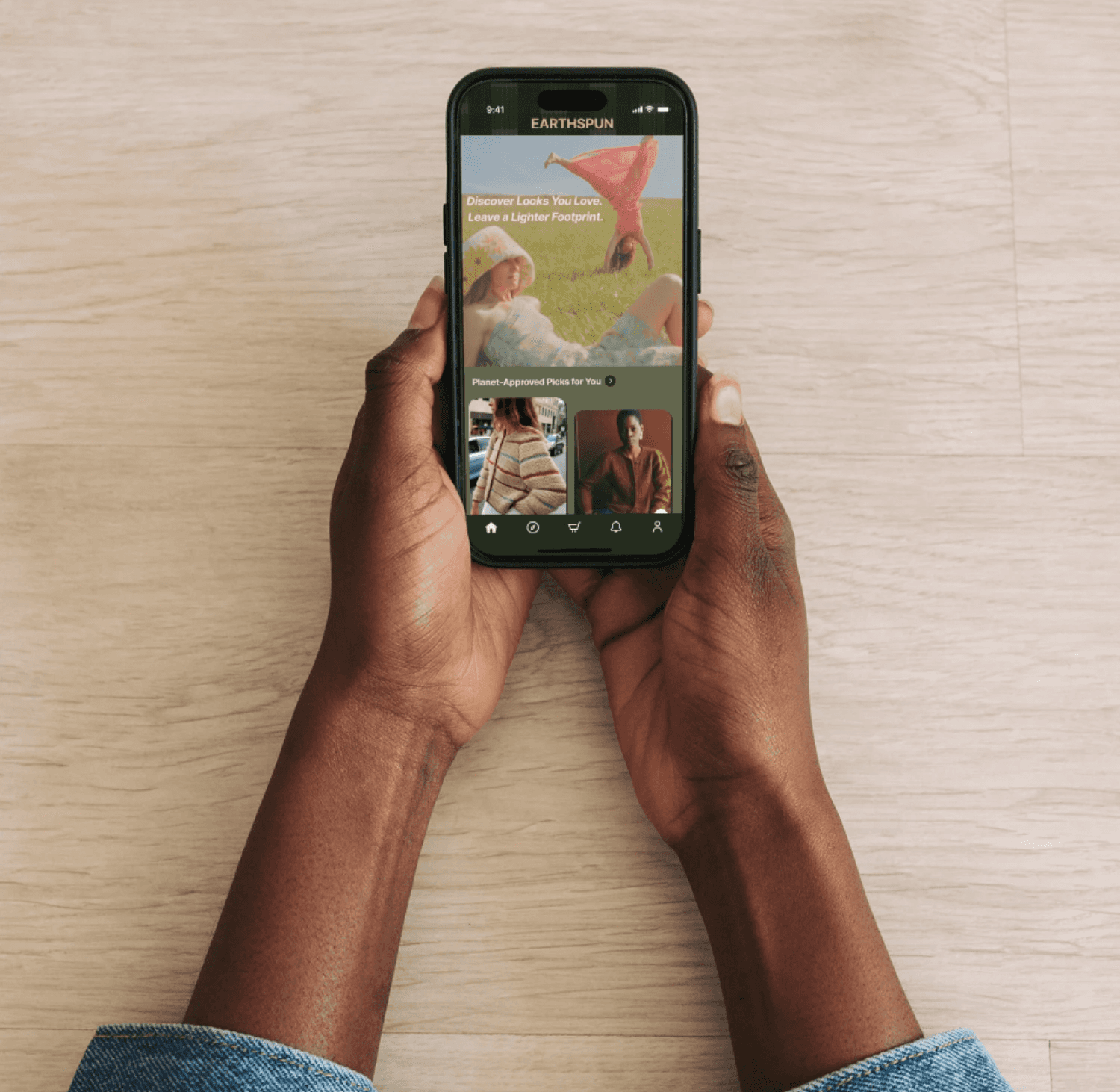
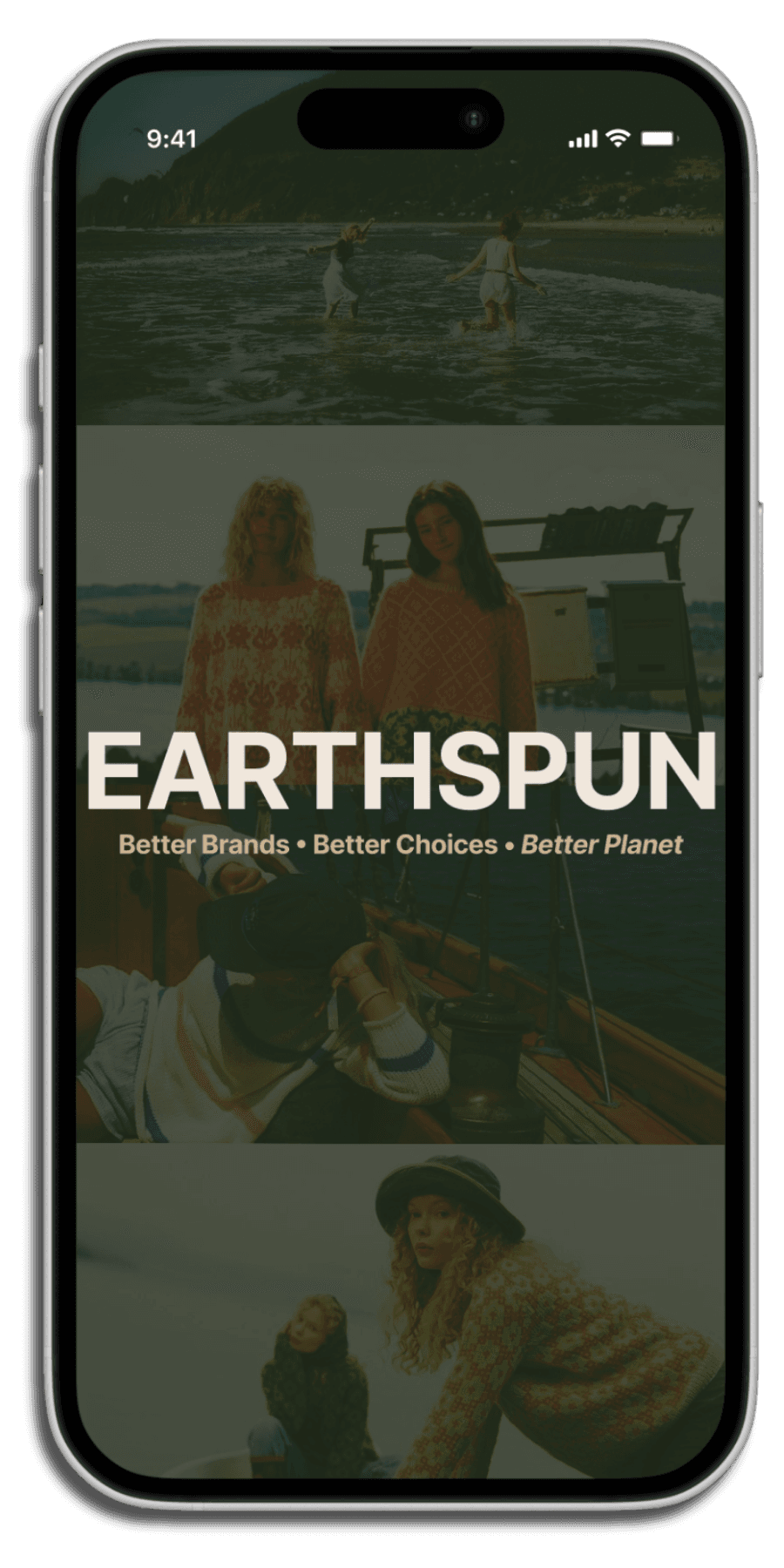
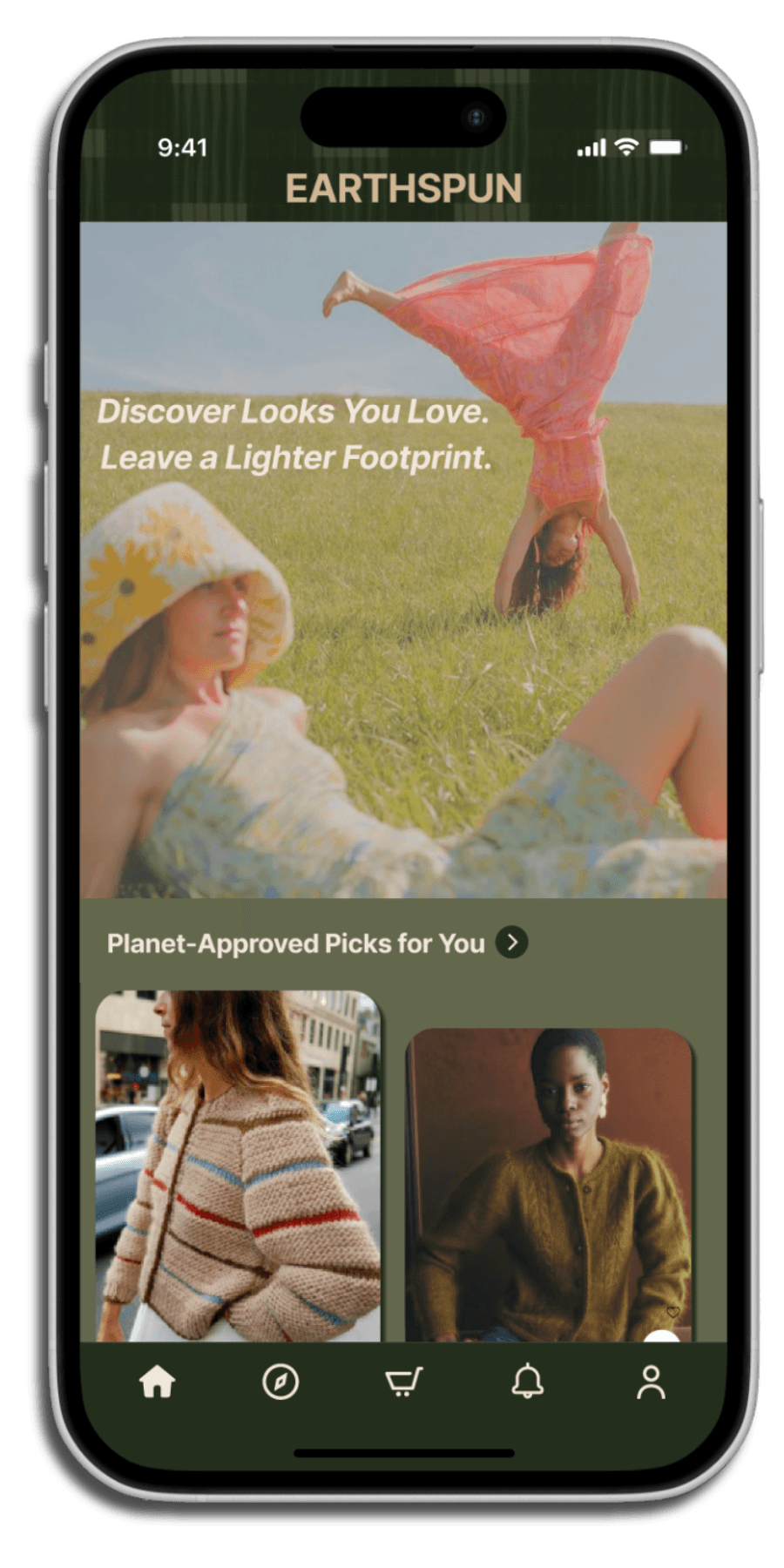
EarthSpun: a shopping experience helping users discover and understand ethical brands without the overwhelm.
EarthSpun:
a shopping experience helping users discover and understand ethical brands without the overwhelm.
Note: EarthSpun is a UX/UI concept project. Product photography and brand imagery are used for demonstration purposes, showing interface design and user flow. All interface design, user experience strategy, and visual systems are original work.
EarthSpun is a UX/UI concept project. Product photography and brand imagery used for demonstration purposes to show interface design and user flow. All interface design, user experience strategy, and visual systems are original work.
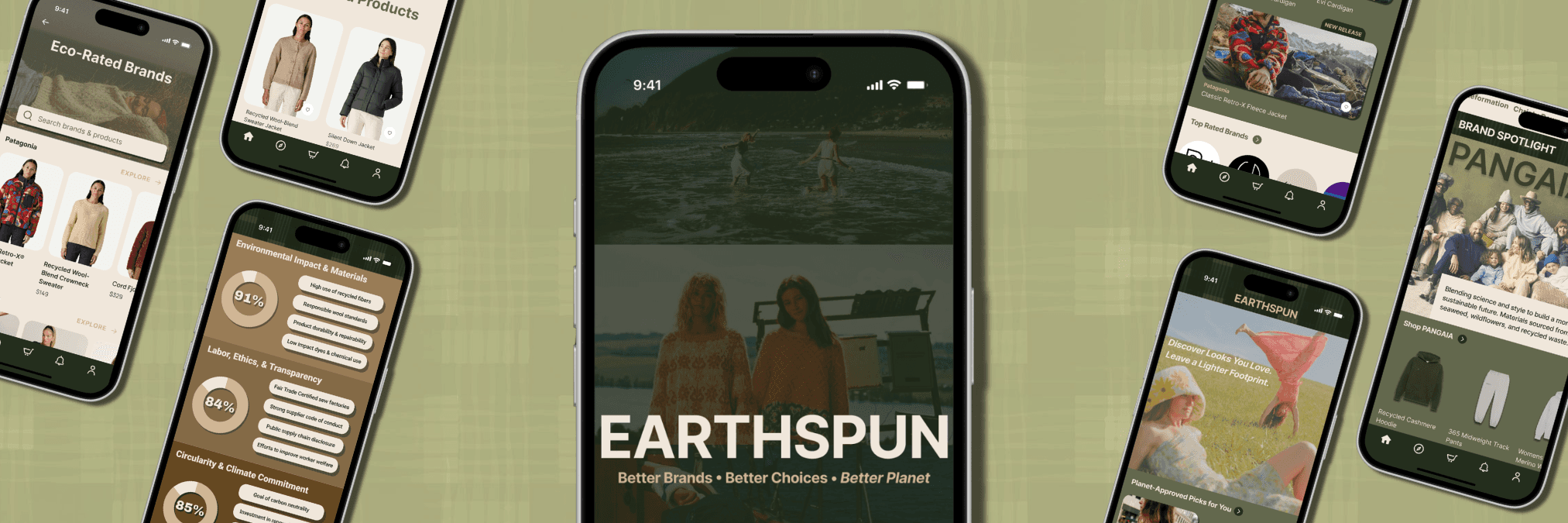
app goals:
app goals:
app goals:
Cluster verified ethical brands onto one platform
Cluster verified ethical brands onto one platform
Build trust through transparency
Build trust through transparency
Simplify sustainability metrics into clear, visual cues
Simplify sustainability metrics into visual cues
Filter by user values (materials, certifications, etc...)
Filter by user values (materials, certifications)
What Sparked the Idea
I previously worked at a small local boutique, where most inventory came from fast-fashion suppliers: synthetic fabrics, trendy styles, and minimal transparency around manufacturing. Sustainability was rarely mentioned by staff or customers.
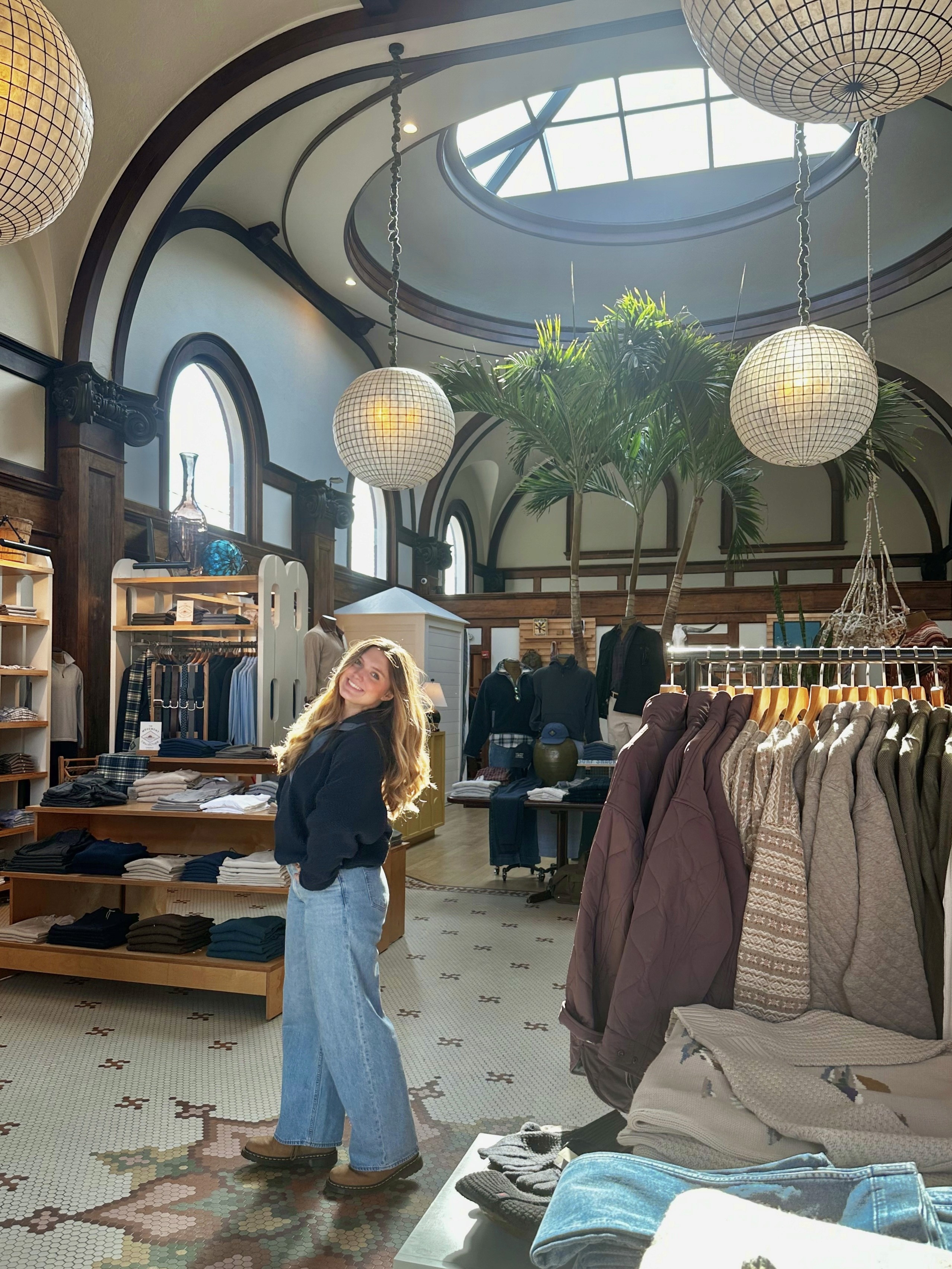
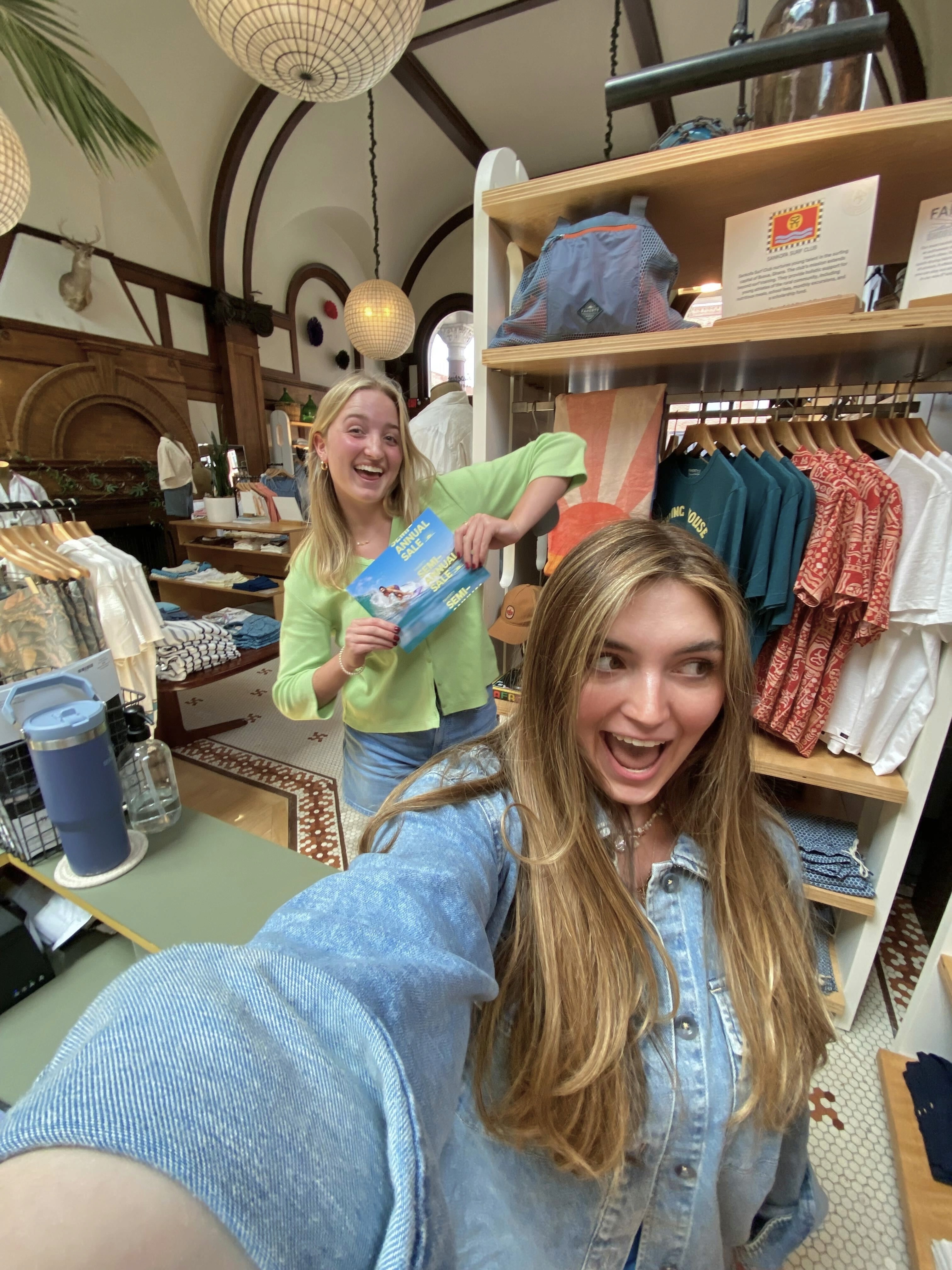
Later, I began working at Faherty, a national retail company and certified B Corporation. From my first day, I noticed a very different culture. The brand was vocal about their use of quality fabrics and customers often asked questions about materials, sourcing, and environmental impact.
I previously worked at a small local boutique, where most inventory came from fast-fashion suppliers: synthetic fabrics, trendy styles, and minimal transparency around manufacturing. Sustainability was rarely mentioned by staff or customers.
Later, I began working at Faherty, a national retail company and certified B Corporation. From my first day, I noticed a very different culture. The brand was vocal about their use of quality fabrics and customers often asked questions about materials, sourcing, and environmental impact.
A Defining Moment
Many customers I spoke with were actively seeking ethical information before making purchases. Their questions showed a strong desire to shop responsibly, but also revealed how time-consuming or confusing that research can be.
On social media, I saw the opposite: people gravitating toward fast fashion purely for aesthetics, unaware of the environmental consequences.
I quickly realized how deeply I care about how people shop, what values brands communicate, and how design can shape better consumer behavior.
Many customers I spoke with were actively seeking ethical information before making purchases. Their questions showed a strong desire to shop responsibly, but also revealed how time-consuming or confusing that research can be.
On social media, I saw the opposite: people gravitating toward fast fashion purely for aesthetics, unaware of the environmental consequences.
I quickly realized how deeply I care about how people shop, what values brands communicate, and how design can shape better consumer behavior.
Consumers want to shop responsibly, but many won’t sift through dozens of brand websites to verify sustainability claims.
Consumers want to shop responsibly, but many won’t sift through dozens of brand websites to verify sustainability claims.
Inside the App
Inside the App
Curated Collections
Curated eco Collections
Discover products collections that match user preferences.
Discover products collections that match user preferences.
Collections adjust dynamically based on:
Browsing behavior
Favorite brands
Seasonal trends
Past purchases & liked items
Collections adjust dynamically based on:
Browsing behavior
Favorite brands
Seasonal trends
Past purchases & liked items
"Low-Waste Coastal Styles Just for You"
"Your Regenerative Cotton Capsule Wardrobe"
"Low-Waste Coastal Styles"
"Your Regenerative Cotton Capsule Wardrobe"
Brand directory
Brand directory
Brand-specific product browsing.
Brand-specific product browsing.
This feature helps users:
Find brands with strong sustainability practices
Compare brand metrics
Follow a brand over browsing random products
This feature helps users:
Find brands with strong sustainability practices
Compare brand metrics
Follow a brand over browsing random products
Educational spotlights
informative spotlights
Celebrate brands exceeding in sustainability efforts.
Celebrate brands exceeding in sustainability efforts.
This feature helps users:
Build immediate brand trust
Celebrate exemplary brands
Turn passive browsing into engaging
Understand the significance of their purchases
This feature helps users:
Build immediate brand trust
Celebrate exemplary brands
Turn passive browsing into engaging
Understand the significance of their purchases
Brand transparency profiles
Brand profiles
Breakdown of materials, certifications, and impact.
Breakdown of materials, certifications, and impact.
To reduce overwhelm, each profile integrates a Sustainability Scorecard summarizing:
Environmental impact & materials
Labor, ethics, & transparency
Circularity and climate commitment
To reduce overwhelm, each profile integrates a Sustainability Scorecard summarizing:
Environmental impact & materials
Labor, ethics, & transparency
Circularity and climate commitment
The Big Picture
The Big Picture
Designing this app taught me that good design can both guide decisions and shape values. When something is complicated, people give up. When it's seamless, they engage. Sustainability doesn't have to feel like homework. It can be clear, approachable, even enjoyable.
The interface needed to be beautiful enough that people wanted to use it, fast enough that it didn't slow down their shopping, and trustworthy enough that they believed the information it provided.
People want to make better choices, they just need the barrier to entry lowered. EarthSpun was my attempt to remove the friction between intention and action, turning "I wish I knew if this brand was ethical" into "Oh, it's right here."
Meaningful solutions come from understanding what people already care about, then designing experiences that make it easier to act on those values.
Designing this app taught me that good design can both guide decisions and shape values. When something is complicated, people give up. When it's seamless, they engage. Sustainability doesn't have to feel like homework. It can be clear, approachable, even enjoyable.
The interface needed to be beautiful enough that people wanted to use it, fast enough that it didn't slow down their shopping, and trustworthy enough that they believed the information it provided.
People want to make better choices, they just need the barrier to entry lowered. EarthSpun was my attempt to remove the friction between intention and action, turning "I wish I knew if this brand was ethical" into "Oh, it's right here."
Meaningful solutions come from understanding what people already care about, then designing experiences that make it easier to act on those values.